Sweden

Sweden is a country commonly known for its natural beauty and scenic tourist hotspots. It is a somewhat peaceful town, and is widely known as the third largest country in the European Union (EU). So, what is the level of gender equality in Sweden?

Sweden is generally a gender equal nation, having been rated the 5th best place to be a women by the Independent magazine.
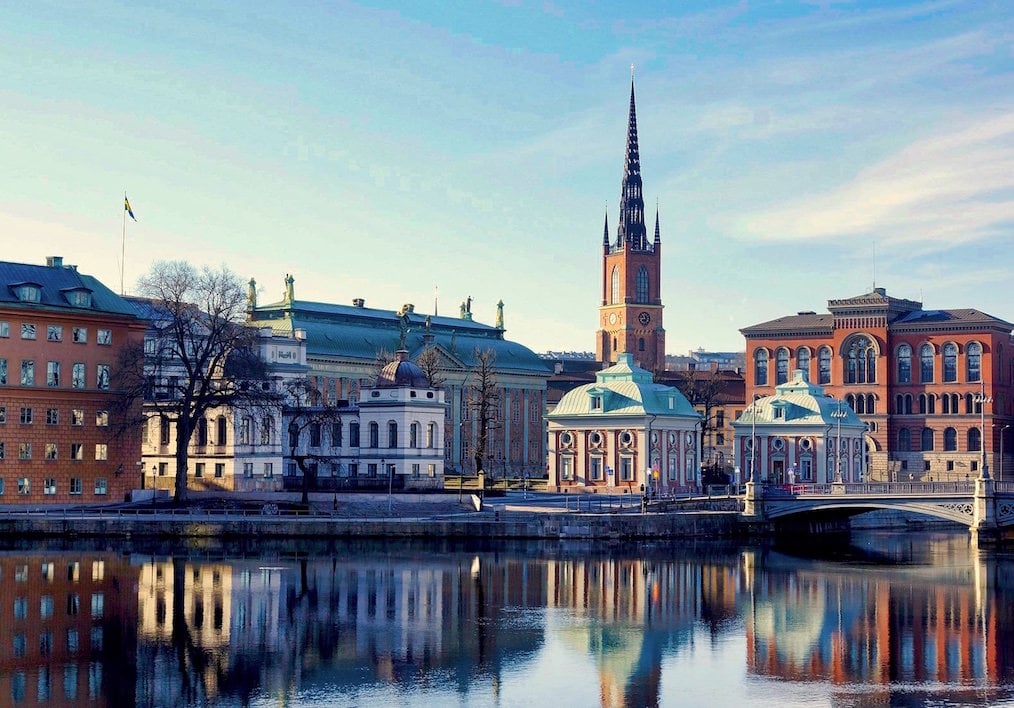
Related image
The above is a typical countryside scene of Sweden.

Equality in the Workplace

On the average board of a Swedish stock market company, almost one in three were women in 2015 – a great increase compared with a few years earlier. In fact, if this development continues at the same pace, the boards of listed companies in Sweden will be gender-equal within ten years.

Sweden Sverige (Swedish government website)

Although significant progress has been made in Swedish’s progress to have equal representation in the workforce, there is still ample space for improvements. For example, statistics have shown that in Sweden, nine out of ten people who appoint the board members are men. It would thus be unfeasible to expect an outcome of equal number of men and women in powers of position if a majority of men are the ones making the decision.

Other Swedish politicians have suggested crafting policies to mandate that each company have a gender-equal boardroom. This can be done through implementing fixed and specific quotas on the number of women to have in a board. Critics, however, have critisized the futility of such a policy. Having a fixed number of a women in a board, for example, may mean that a women may be chosen although she may have been neccessarily more skilled than another male collegue who did not get selected due to the limitations on the number of men. This may lead to a decrease in a company’s eventual effectiveness in serving its purpose as its constituent members have been selected not based on capabilities, but simply based upon the fact that that specific gender had to chosen to meet the given quota.

Another opposition to implementing the policy of gender quotas is the number of available men and women in that company. Different companies inevitably have a varying number of each gender in its company. It is for a fact that some industries relating to math and science have indeed seen a spike in the number of male employees hired in their companies. Hence, it would not be practical to implement such a quota in this case, as some companies would simply not have enough women to be able to fill the quota of having a equal number of each gender in higher positions. This is another issue that politicians propelling the implementation of policies to curb inequal representation of women have faced in the last decade.

Office bullying by men to women at work
The above picture is adapted from a BBC News report which stated how “women boses were ‘more depressed’ than their male counterparts”

The Swedish Discrimination Act from 2009 demands that employers not only actively promote equality between men and women, but also take measures against harassment. Following a 2017 expansion of the law, the preventive work includes harassment related to all grounds for discrimination: an employer’s sex, transgender identity or expression, ethnicity, religion or other belief, disability, sexual orientation and age.

Extracted from the Sweden Sverige (Swedish government website)

The above quote shows the hard stance that the Swedish government has taken in efforts to achieve gender equality in its nation. Gender inequality and any other form of discrimination against women, be it due to a women’s state of pregnancy or pre-labour, is not something that the Swedish government would stand to tolerate.


Image result for sweden gender equality
Sweden has one of the highest records of women serving in National parliament, as see in the statistics listed in the picture above.

Singapore

Set in the straits of the Malay Archipelago, the phrase “metropolitan city” has frequently been associated with Singapore in the last few decades. Having transitioned from a third world country to a first world in less than half a century, this country has surely adapted quicky to the new challenges that our world currently face in status quo.

Alongside progress of any country, there is sure to be inequities that breed in every society. In this post, we would be analysing:

  • The level of gender equality in Singapore
  • Policies that have been implemeted to mitigate gender inequality
  • Case Studies of gender inequality in Singapore

What is the level of Gender Inequality in Singapore?

The issues of gender equality that we will be analysing is:

  • Employment and wage gap
  • The roles of women and men in the household
  • Education

Singapore is a democratic society where equal opportunities are given to both men and women to improve their current state of life by excelling in thier occupation. In this case, if equal opportunities have been presented to both genders, many would question why there would even be an issue of gender inequality in Singapore.

To answer the above inquiry question, we would have to look at the official statistic and ratings of levels of gender inequality

A measly 10 percent of all corporate directors of SGX-listed firms are women, and they are paid a whopping 43 per cent less than their male counterparts.

In Singapore, women earn a staggering S$640,000 less than their male counterparts over a 40-year career.

Gender gap in CPF (Central Provident Fund) savings of around 11 per cent between the average CPF balances of women and men

~Channel News Asia SIngapore
High rise buildings in the Central Business District, commonly known as the heart of business flourishment.

The above reveals a lack of representation in company positions, and even among the top firm positions, income inequality in still a stife problem. Women earn significantly lesser than males (close to half a million in their lifetime) even those they hold equal positionings and complete the same amount of workload. So, why is this so?

Income inequality and lack of representation in even in upper-crust companies because of:

  • Lack of policies that require employers to offer equal pay for equal work
  • Women are not considerably regarded for promotions as stereotypes perceive that they are not capable enough and suggest a limit to their usefulness to a company
  • Discriminated against because of their motherhood/pregnancy status

PREGNANCY

Some mothers do not return to work after giving birth as they think bosses see them in a different light – as being less committed and more saddled with family distractions. Such attitudes lead them to feel that they are less valued by their companies.

Some may see pregnancy as a small and uncommon issue: Manpower Ministry statistics show only 57 pregnancy-related unfair dismissals in 2016. BUT the statistics would have been higher if the department took into account those who were forced to resign, demoted, or had their salaries reduced or asked to work part-time instead of full-time etc.

Inequality in Education

In Singapore, it is mandatory for all Singapore citizens, regardless of their gender, to attend Primary school. Primary school refers to schooling for children aged 6-12.

Singapore is a developed country and many of its citizens can be generally considered as economically-stable. Hence, cases wherein parents are too poor to bring their children to school is generally scarce. As result of good governance in Singapore, parents would not have to mandate only one of their children to attend official schooling. In Singapore, education is also generally affordable. A month of schooling in primary school only costs a fee of approximately $14. Hence, it can be considered that gender inequality in the terms of affordable and accessible education is generally low.

Image result for education pic

By Charlotte 😉